


46 km in 10 hours
On Saturday 22 April, the eve of Sant Jordi, an expedition formed by four mountaineers ran the last three stages of St. Josemaría’s journey through the Pyrenees. Edu N, Gons V, Pep S and Martí R (who writes these lines) were prepared to simply do one of the things we like the most: running on the mountain. But, simply? Of course not. The Pyrenees Pass gave us the opportunity to walk the path that St. Josemaría did at the end of November 1937.
Our initial objective: leave Cabó at 8 a.m. and arrive at Sant Julià de Lòria at around 6 p.m. In total, about 10 hours of walking to reach a distance of about 45 kilometers and a positive slope of almost 2900 meters. The planned time included provisioning: for up to 4 occasions, a reinforcement team would provide food and drinks where the route crossed accessible roads. Nothing was left to chance. The driver and guide of the expedition -Edu- carried among his supplies a few pages with the altimetry of the route and the times that we had to follow.
We left at 8:30 a.m., somewhat later than the originally scheduled time. With a cheerful mood and good weather, we first entered the forests and began to follow the marks that pointed the way. Immediately, we faced the first important slope of the day: the Ares, a mountain in the Cabó Valley, with abundant Mediterranean vegetation and very steep slopes. We felt fresh, so the climb was not a big effort.
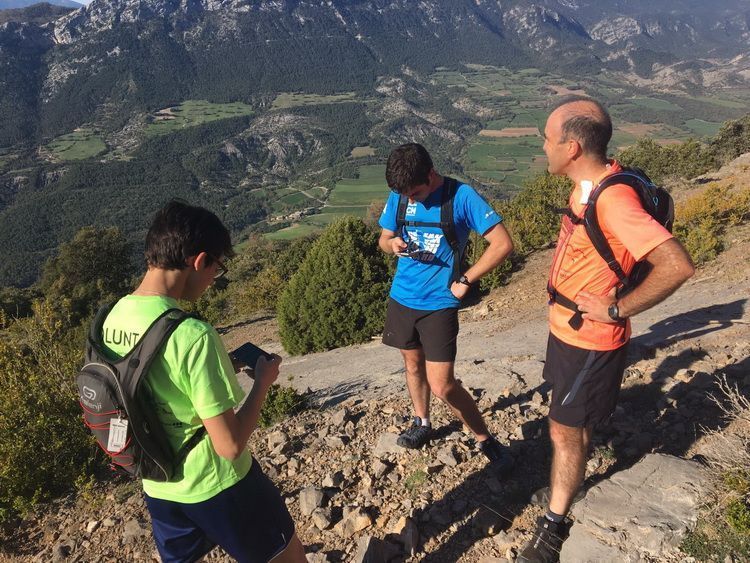
As is often the case on the mountain, when you reach the top and look back, you are able to look at the beauty of the landscape and think that this world is still worth it. At our feet, the leafy valley of Cabó; to the south, the imposing valley of the Segre. Gradually, we were catching our breath. Exponentially, we were invading by the beauty of the place.
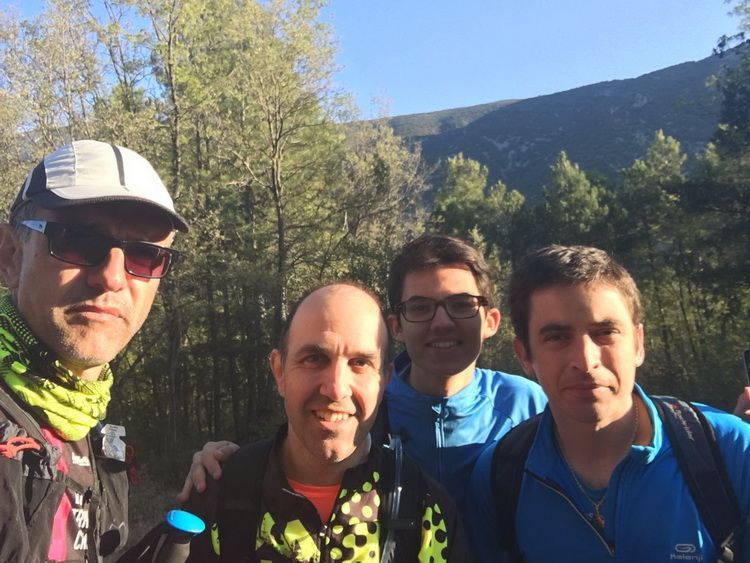
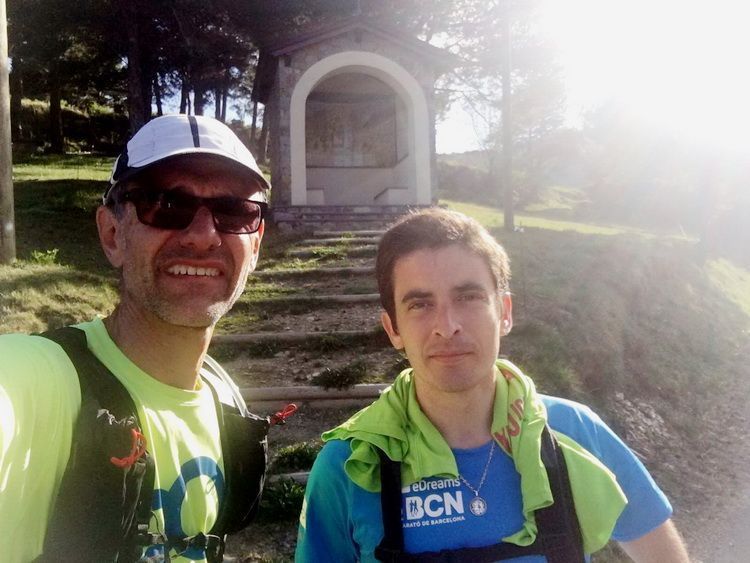
It is 10 a.m. The sun is in place and so are we. We take some photos and follow our way.
Before the path that leads down to Noves de Segre, the road descending from the top of the Ares becomes plain for a couple of kilometers, in which the valley of Segre appears before us in all its splendor. Beautiful landscape!
The road that we follow towards Noves de Segre is abrupt and low down the mountain, which here is covered by abundant vegetation, based on pine, oak and boxwood. Upon arriving at the valley of Noves, we have a little less of cartilage in the knee and a sensation of having enjoyed the mountain in this first section of the day.
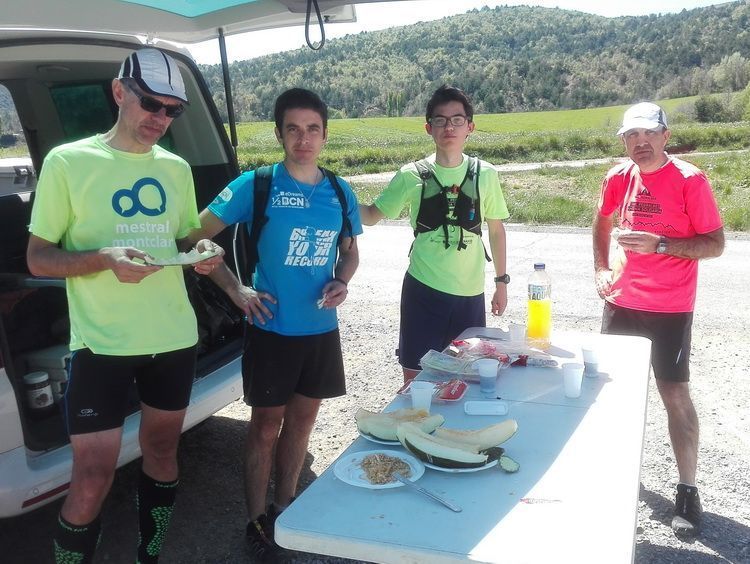
First victualling, next to the road of Noves de Segre, just before Cal Pallarés. Bread, sausages, isotonic drinks, nuts and even a melon! Octavio R, a geologist and expert on the Pyrenees Pass, gives us tips on how to overcome obstacles in the way.
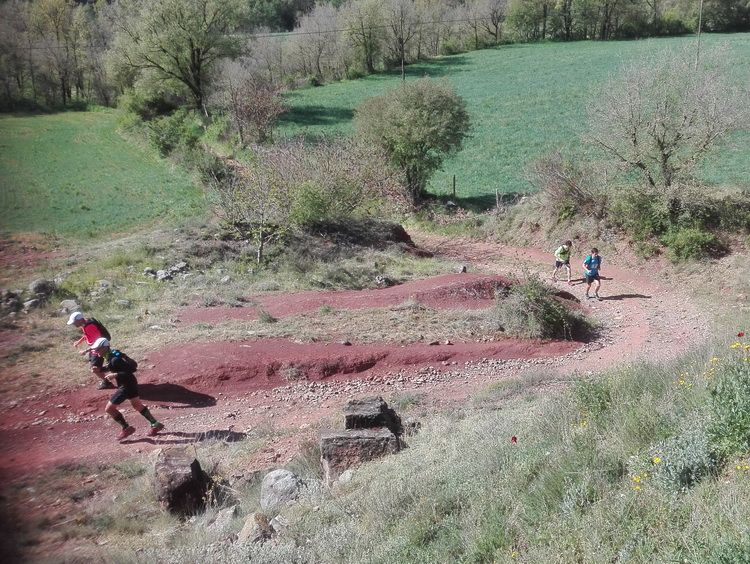
After regaining our strength, we embark on the perhaps more monotonous section of the route: about 11 kilometers, quite flat, separating Noves de Segre from Aravell. The only adventure component of this stretch is that you have to cross the Aravell River several times. By means of fixed stones, we were able to cross the river and arrive safe and dry to the town of Aravell.
In Aravell, it’s time for the second victualling. Not especially because we were already exhausted – even if, truth be told, we had already travelled for about 25 kms. -, but actually because we had to be ready to face what was coming: the ascent to Collada de la Torre. The rest of the food, the desire to reach the finish line and a couple of pieces of melon encouraged the whole group to move forward with renewed strength.
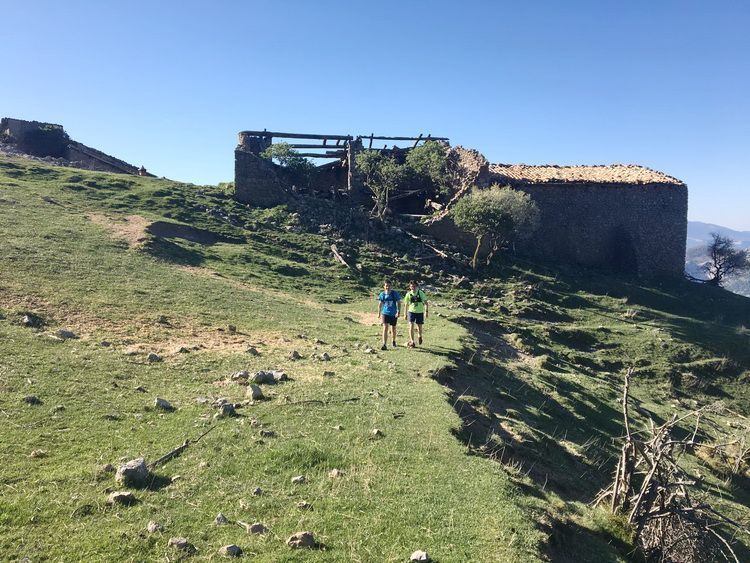
1 p.m., with the sun at our backs and a strong slope ahead. The arrival at Collada became long and tiring. Despite the difficulties, the spirit did not falter and we accepted one of the maxims of the mountain: if it cannot be today, we will return on another day, as the mountain is not going anywhere.
The descent through the dense forest that leads to the ravine of Civis was a relaxing and reassuring ride, especially when compared to the strenuous climb to the pass. There is a descent of 700 meters of unevenness in only 3 kilometers of route. But here, on the banks of the river Civis, the following food was waiting for us: spaghetti with tomato sauce, steaks and more melon. It was 5 p.m. With an appetite difficult to hide, we soon eat the victuals.
After the ascent of La Cabra Morta, we soon spotted Argolell and, above the village, Mas d’Alins, already in Andorran territory, the highest point of the route. Shortly after Mas d’Alins, we passed by the hermitage of the Mare de Déu de Canolich, where we prayed for a while, also remembering the passage there of the expedition of 1937. When the supporting vehicle went up in search of the corridors, Edu and Gons were already descending towards Sant Julià de Lòria, facing the last curves of the road that ends in the Andorran city. Despite the fatigue, they had a very good face. Undoubtedly, it was the clear reflection of the satisfaction that is felt upon seeing the goal fulfilled: having run the almost 50 kilometers that make up the last three stages of the Pyrenees Pass. And all of it, 46 kilometers to be exact, in a bit less than 8 hours running and walking.
A hard, hectic, but tremendously rewarding day. Already in the car, we became mutually aware of the various adventures during the day. In silence and with the calm of the trip, we were assuming the greatness of the Pyrenees Pass. We went back to Igualada. A little more tired, yes; but also a little more courageous, a little better friends and a little closer to St. Josemaría.
Some Technical Notes
|
Km |
Moving Time |
Victualling |
TOTAL |
|
|
Cabó |
0 |
|
|
|
|
Noves de S. |
15 |
2h40m |
20m |
3h00m |
|
Aravell |
27 |
1h40m |
30m |
5h10m |
|
Río de Civís |
38 |
2h30m |
20m |
8h00m |
|
Fontaneda |
46 |
2h00m |
|
10h00m |
|
Totals |
46 |
8h50m |
1h10m |
10h00m |
Enclosed track and link data Strava
https://www.strava.com/activities/953352975


Tremenda caminata, y magníficos los paisajes recorridos. Me gustaría saber las alturas sobre el nivel del mar por las que se hizo el recorrido, para acomodarlas a las altitudes por las que solemos caminarJ65T34 acá en el Trópico. Felicitaciones.
Felicidades a estos fantásticos deportistas!!!
Gracias por hacernos partícipes a los que nos metemos en la Web
Enhorabona sou uns cracks!!!!!
Impressionant testimoni, moltes gràcies. Gràcies Sr. Quico per aclarir-ho, jo hauria dit que Gons derivava del nom Gonçal.
Doncs, Alfons i amics Igualidns, l’enhorabona per la gesta des del Club muntanyenc de Sant Cugat.
Quiero aclarar que, aunque sólo me dediqué a asegurar los avituallamientos en los puntos previstos, disfruté tanto como ellos de esa grandísima aventura. Por eso, cuando intenten el recorrido completo, ya saben que pueden contar de nuevo conmigo. Tampoco faltarán los melones, que tanto alivian las fatigas de los corredores.
Felicito als igualadins
Voldria aclarir que Gons vol dir Alfons
Felicitats i gràcies per haver-ho fet. !!!!
Enhorabona, valents… ara ja sabeu perquè és tan dur el Pas dels Pirineus… A veure si aviat ho podeu fer tot sencer d’una tirada!!!