


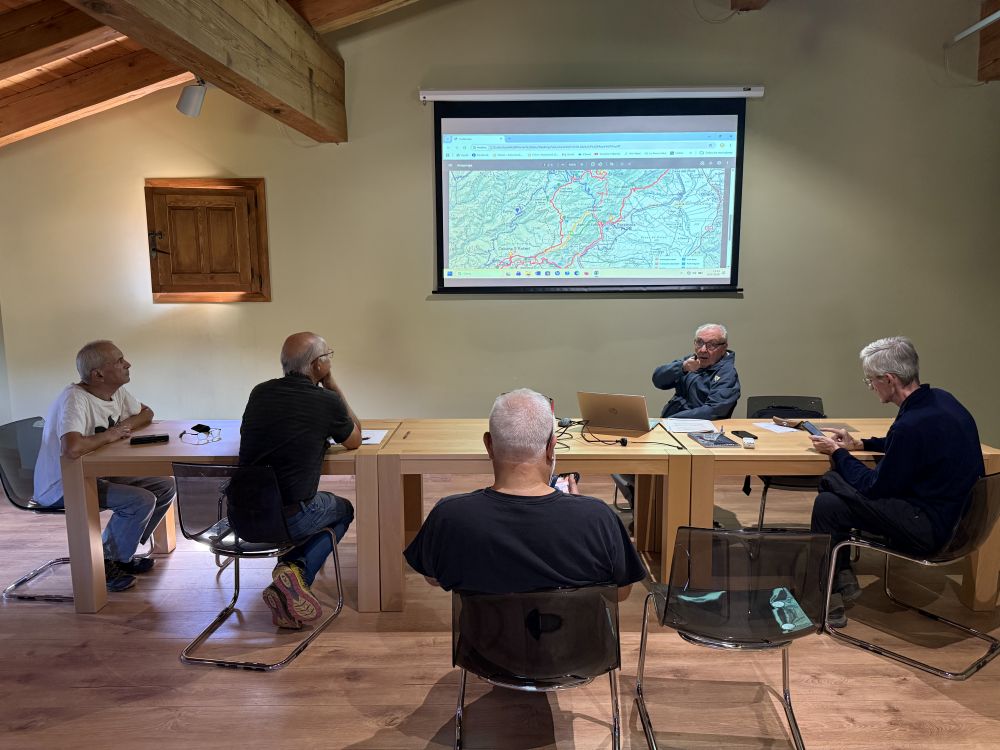
Theory session to define routes and areas for improvement
At 10:30 a.m. on Saturday, September 19, the following volunteers met at Pallerols: Paco Penella, Jordi Pérez, Ramon Camats, Lluís Abardía, Josep Maria Vila, Enrique Tormo, and Jordi Piferrer.
To begin, we held a theoretical session: Jordi Piferrer explained why the route taken by Saint Josemaría is called the “Andorra Path” (*Camí d’Andorra*). He gave the following reasons:
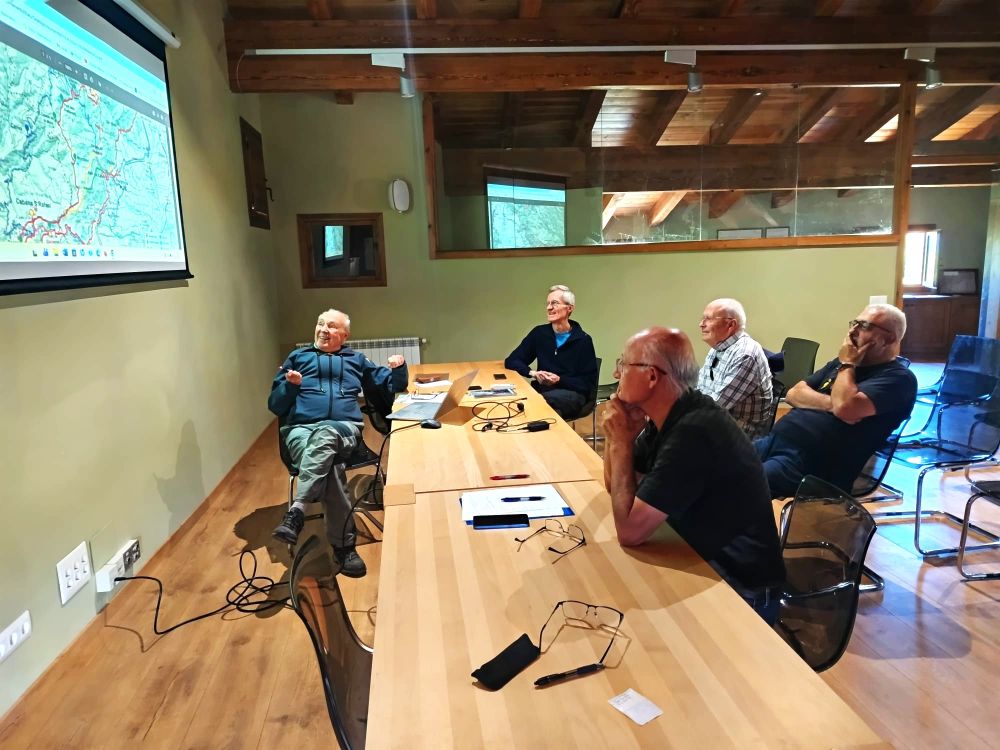
Theory session to define routes and areas for improvement
a) This is how it was defined at the time the Association of Friends of the Pallerols de Rialb to Andorra Path was established, as recorded in the minutes of seven meetings held in 2004: February 25, March 11, June 2, June 9, June 23, June 30, and July 8.
b) The “Andorra Path” appears under this name on many maps published by Alpina, as well as in various issues of the CEC’s *Muntanya* magazine, in some publications by the Alt Urgell County Council, and currently in AI search results as well.
-He continued by explaining the reasons for certain minor differences between the historical route taken by Saint Josemaría and the one we follow, known as the “Andorra Path.”
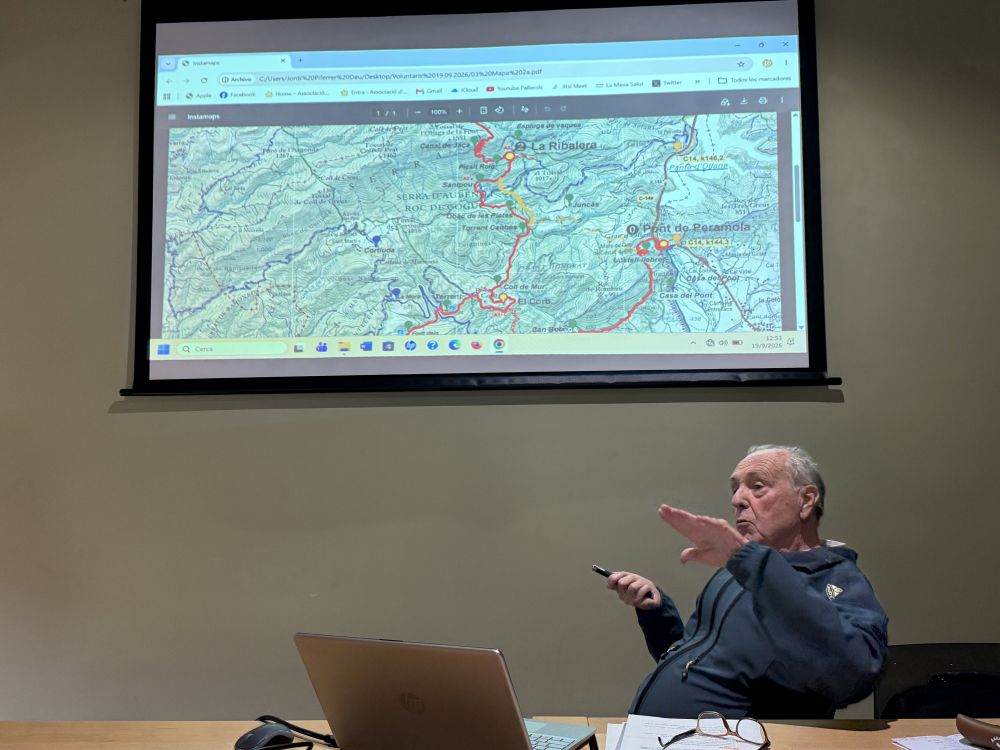
Theory session to define routes and areas for improvement
a) From the Pont de Peramola bridge to the Vilaró house. The path Saint Josemaría followed along this stretch is now a paved road. Consequently, it was decided to create an alternative route reaching Pallerols via Mount Sant Marc. This path coincides with the GR1 trail running from Oliana to Pallerols.
b) To travel from the Saint Raphael Cabin to El Corb, a decision was made in 2005—upon the advice of Jordi Pasques and other local experts—to establish a fascinating mountain route passing through Montlleví and Torrent. However, according to the Diari del Pas (Crossing Diary), the path taken by the 1937 expedition likely did not pass by these two farmhouses; this conclusion is drawn from our reading of texts from the 1937 diary written by Pedro Casciaro and Manolo Sainz de los Terreros. In light of these writings, Jordi Pi. proposed also mapping out a more historically accurate route that reaches El Corb without passing through Montlleví and Torrent. It was decided that Paco Penella, Josep Maria Vila, Jordi Bosch, and Jordi Piferrer would investigate this new route sometime in October or November.
c) From the Casa del Corb onwards to Andorra, the route aligns more closely with the historical documents written by the fugitives in 1937.
Note.- It should be noted that since we began the Camí d’Andorra (Andorra Trail) project in 2003, we have defined the route primarily by following the historical documents written by those who made the journey in 1937, while also adhering to two principles: never using paved roads and always allowing ourselves to be guided by local residents.
Many people have guided us in accurately defining these paths. Among many others, we will mention: Remigi Vila from Torrent, Jordi Pasques from Oliana, Pere Sala from Vilaró, “el Minguet” (Domingo Inglavaga) from Cal Guardiola de Rialb, Josep Boix from Juncàs, Eugeni Coll from Fenollet, Climent Campi from Bellestar, Francesc Duró from Cal Caminal d’Argolell, the guide Josep Cirera from Cal Roger de Bellestar, and many others not listed here but all included in the book Camí d’Andorra.
There was also discussion regarding the Comalpou Spring; someone had buried it and torn down the signs we had installed. Together with the mayor of La Baronia de Rialb, we have decided to restore this historic spring.
-Next, the specific tasks to be carried out in October were outlined:
a) Rebuilding the final section of the path passing through Collada de la Torre.
b) Clearing brambles from the section of the path following the Fener hermitage in Argolell. We will speak with the people at Cal Caminal to inform them.
-Dates for the following events were also set:
a) Saturday, November 21: “Trobada de la Rosa” (Rose Gathering) Festival.
b) Saturday, November 28: “Rosa del Nord” Night Hike.
c) December: Nativity scene at Pallerols with families, coordinated by Jordi Pérez.
d) May: Pilgrimage to Pallerols.
e) June: Gathering in honor of Saint Josemaría in Andorra.
We will define the work to be done for the other months as we go along.
-After settling all these matters, we worked hard to stack 1,200 kg of firewood inside the shelter for the fireplace. This ensures we have a supply of firewood for at least two years.
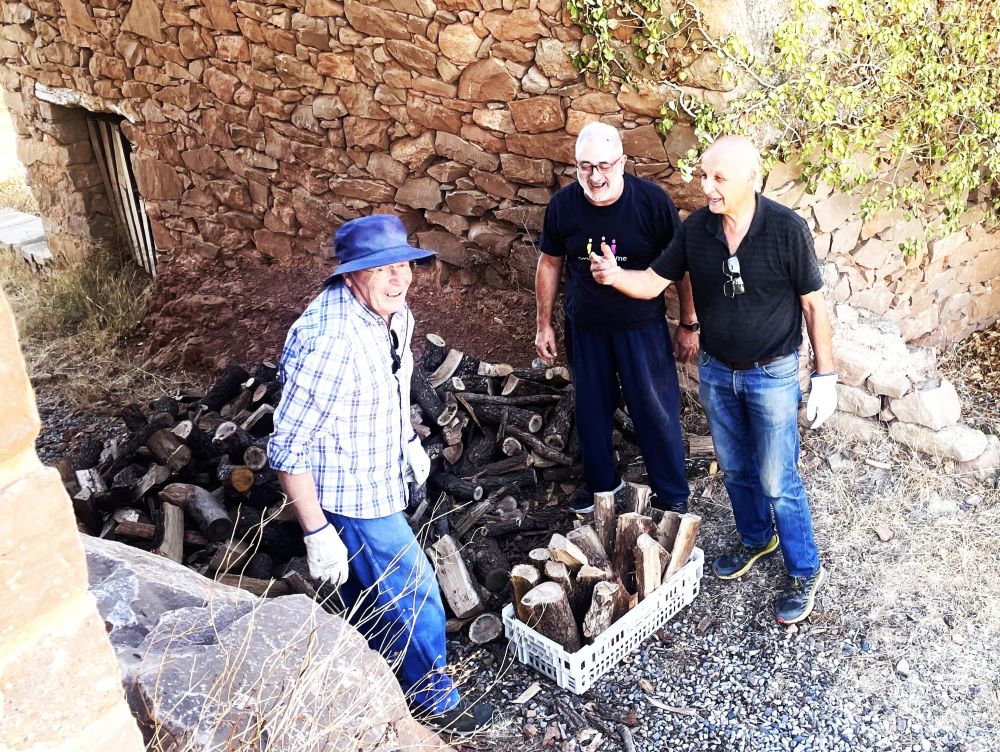
Unloading 1,200 kg of firewood for the Pallerols refuge fireplace
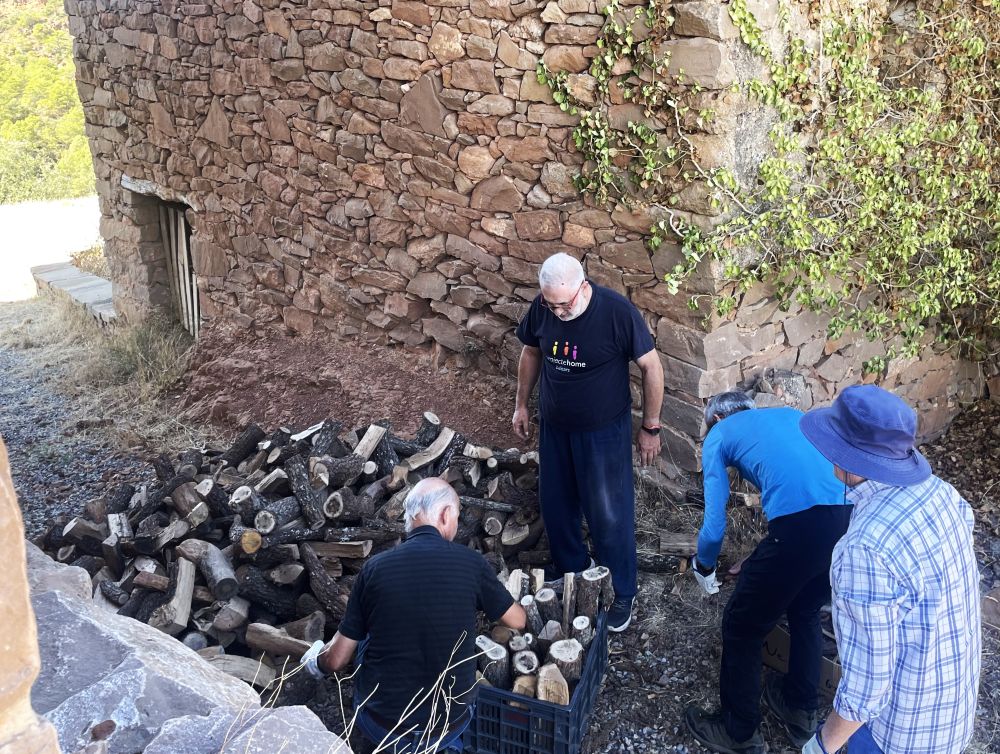
Unloading 1,200 kg of firewood for the Pallerols refuge fireplace
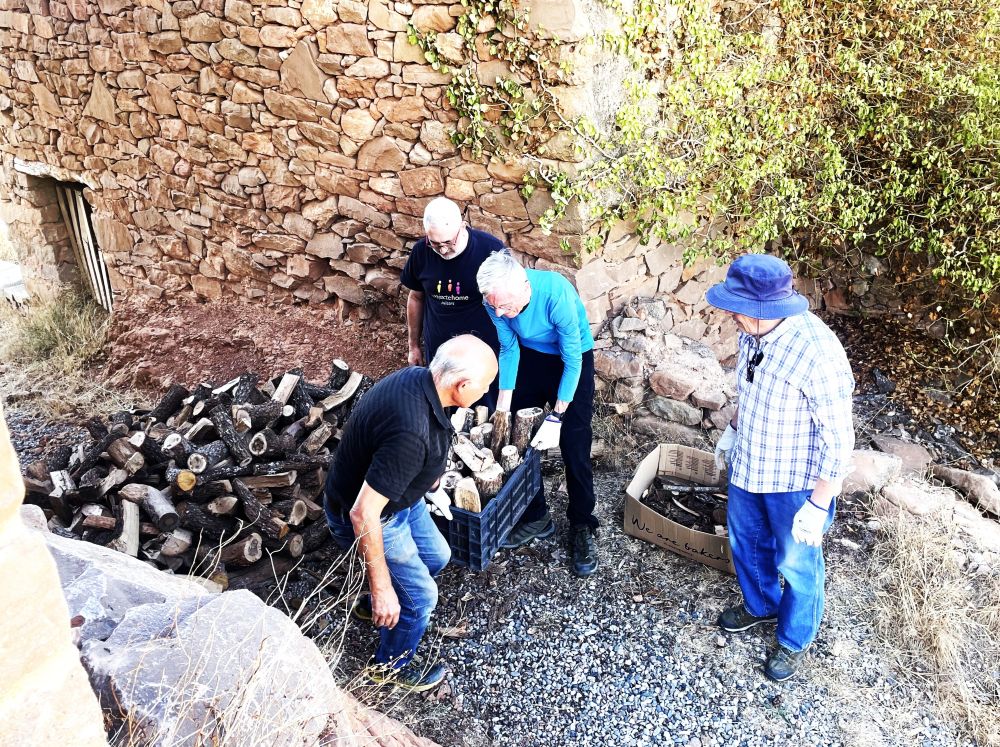
Unloading 1,200 kg of firewood for the Pallerols refuge fireplace
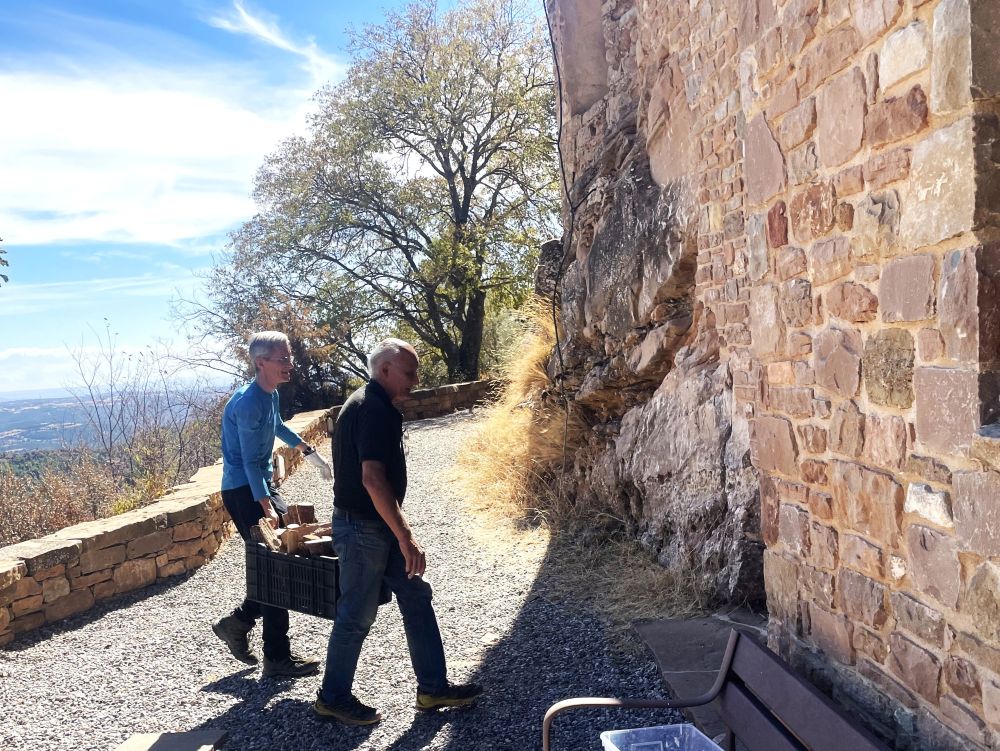
Unloading 1,200 kg of firewood for the Pallerols refuge fireplace
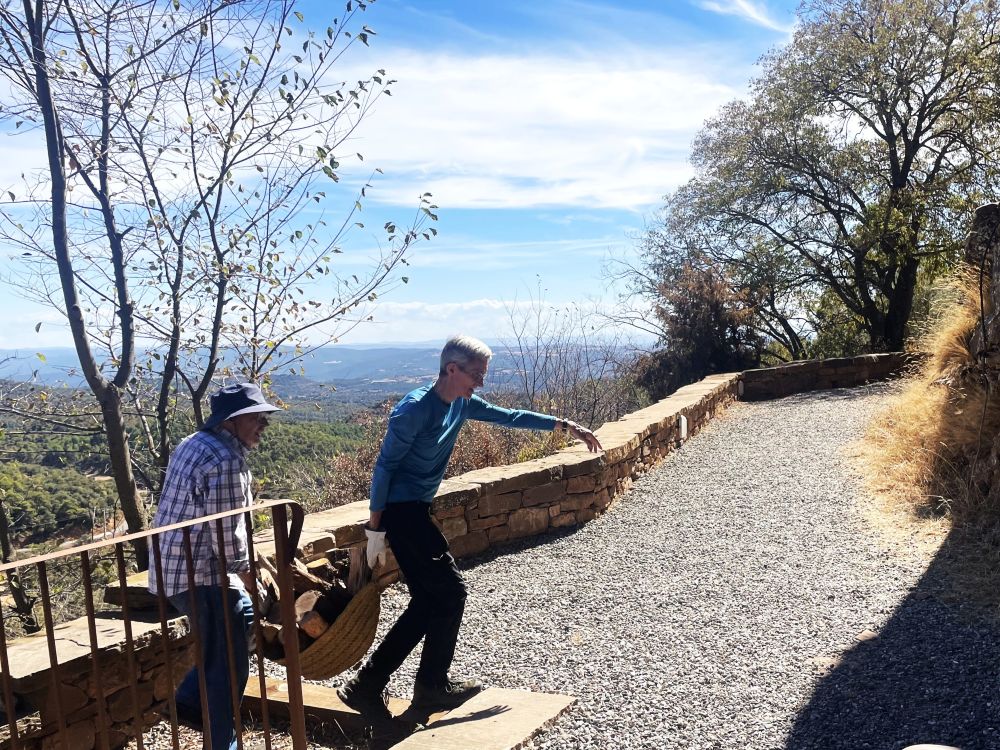
Unloading 1,200 kg of firewood for the Pallerols refuge fireplace
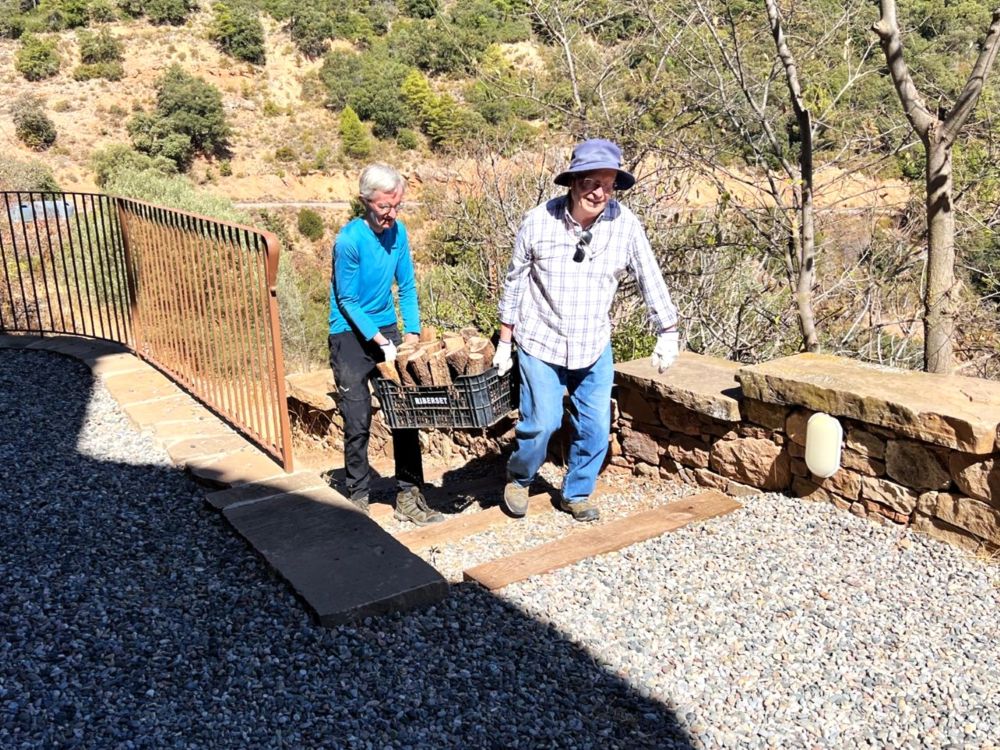
Unloading 1,200 kg of firewood for the Pallerols refuge fireplace
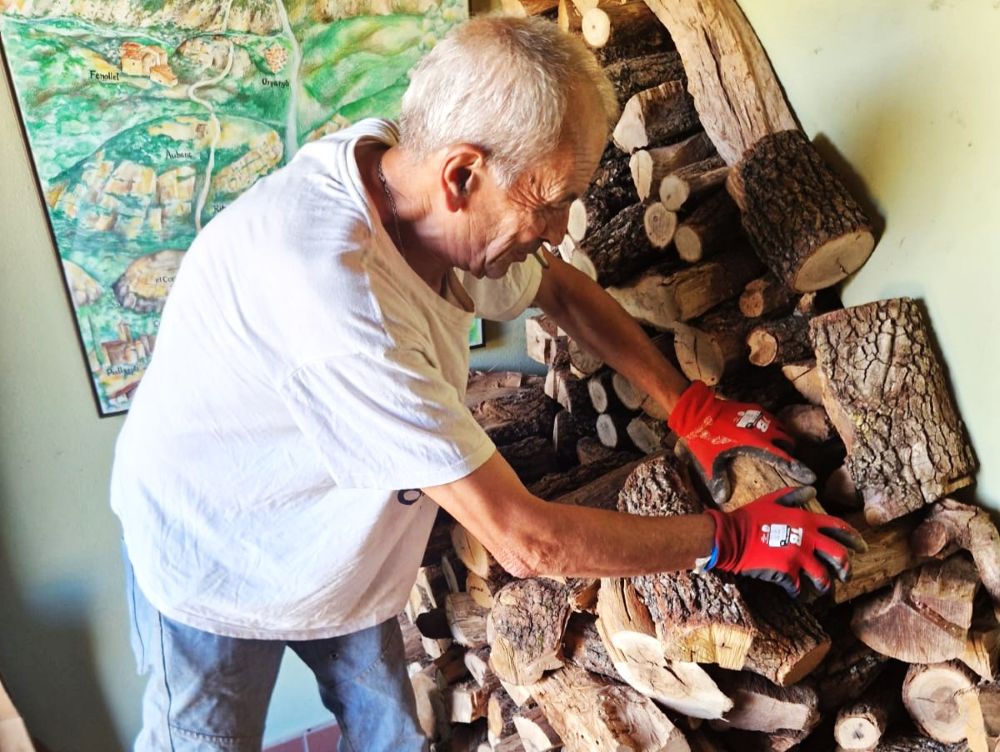
Unloading 1,200 kg of firewood for the Pallerols refuge fireplace
After a short break,
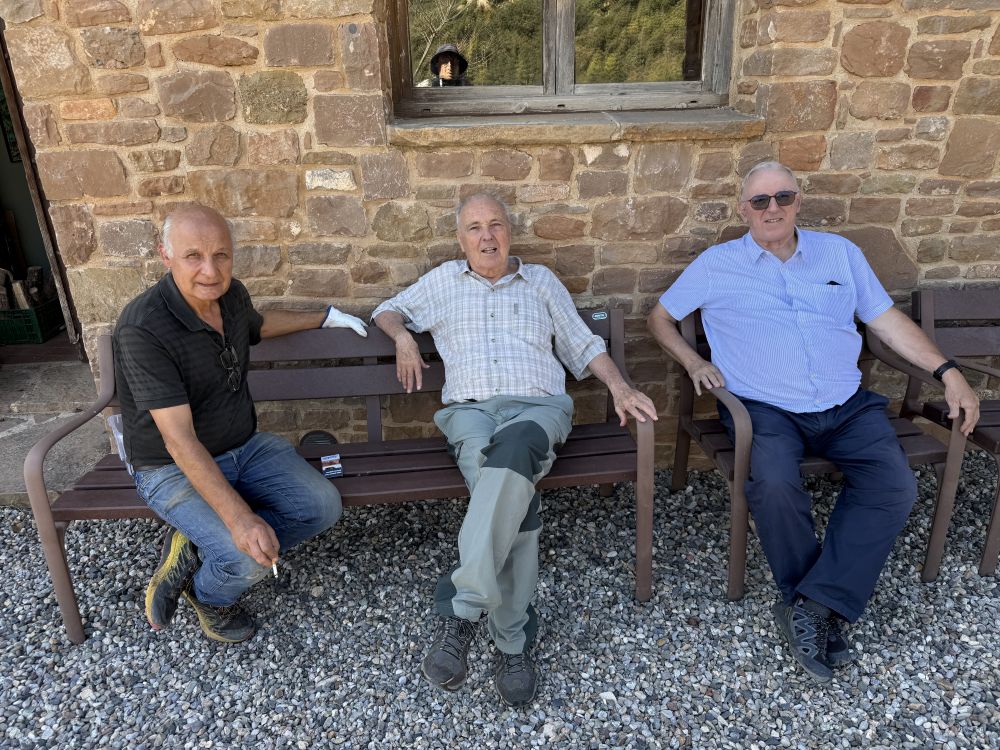
A well-deserved rest
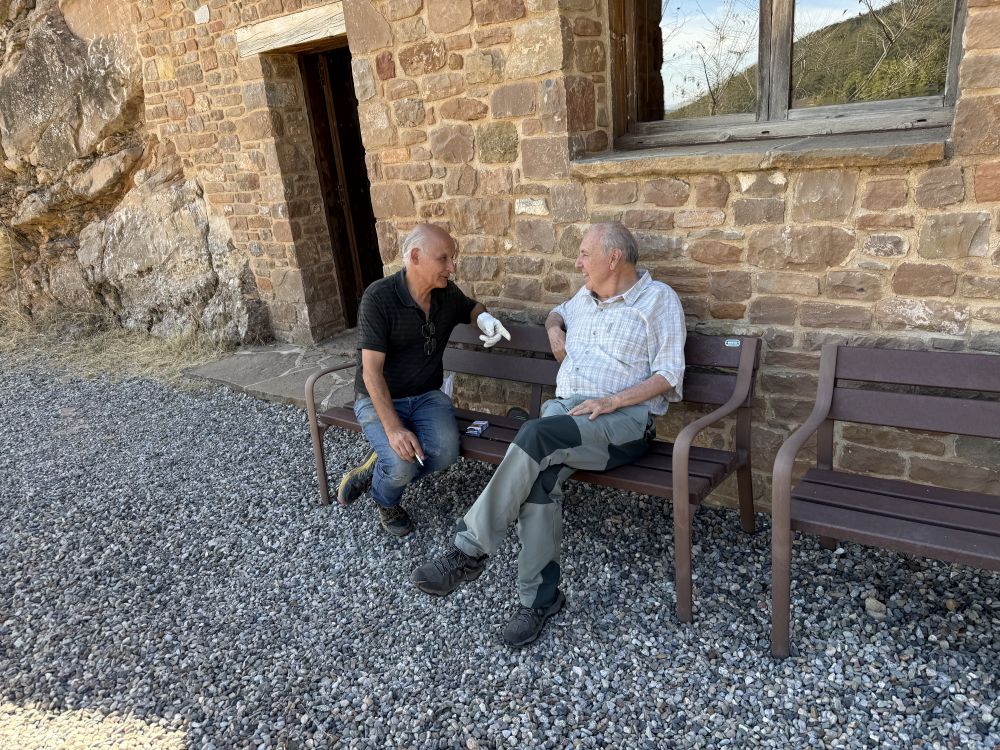
A well-deserved rest
We enjoyed a hearty lunch made up of the food everyone had brought along, though—as is now customary—Enrique Tormo made a special contribution, surprising us with an assortment of appetizers, figs for dessert, rum-soaked raisins, and so on. To finish things off: coca (traditional catalan flat cake) and chocolate, coffee, and a splash of liqueur.
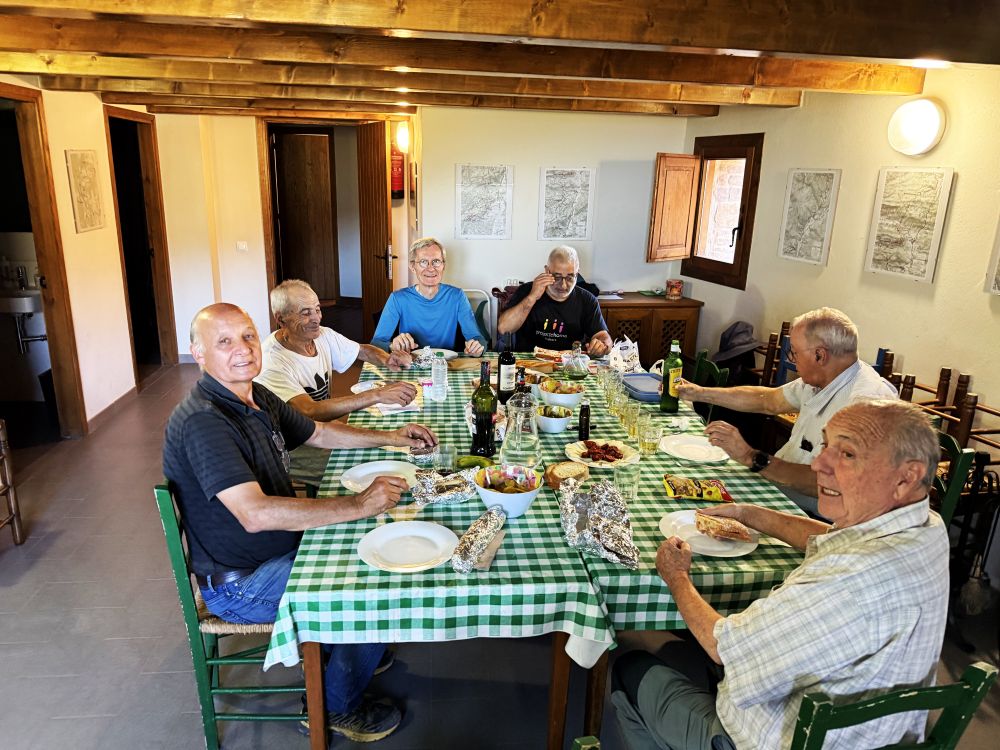
A magnificent lunch
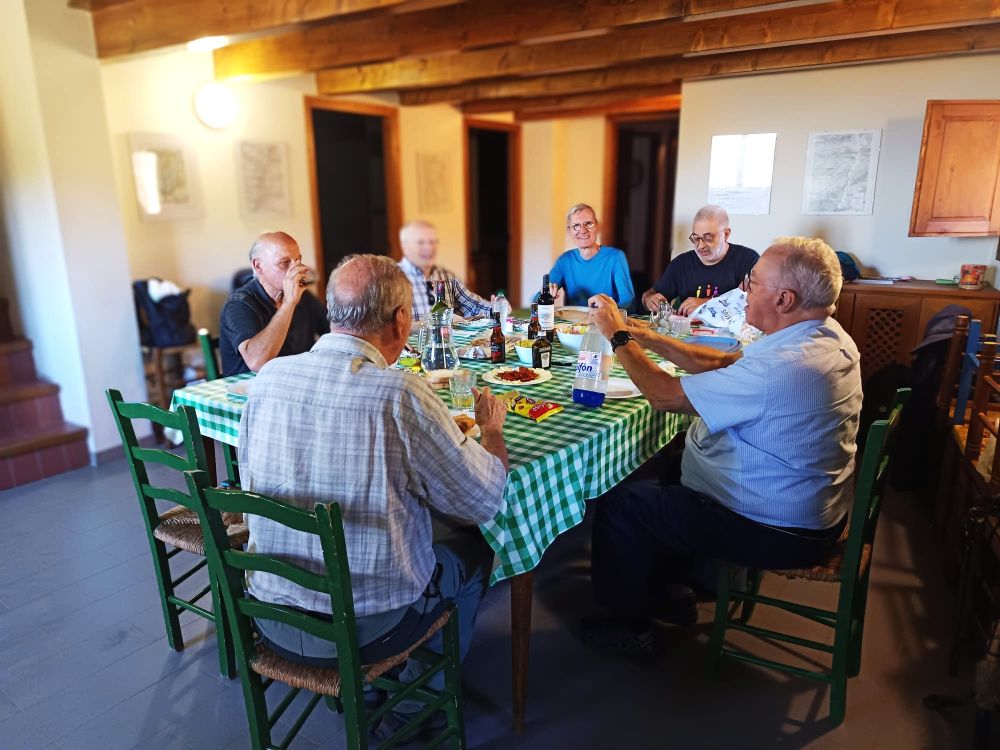
A magnificent lunch
It is certainly worth coming out to help on the second Saturday of every month. Sign up!


Excel·lent reportatge i notes històriques.